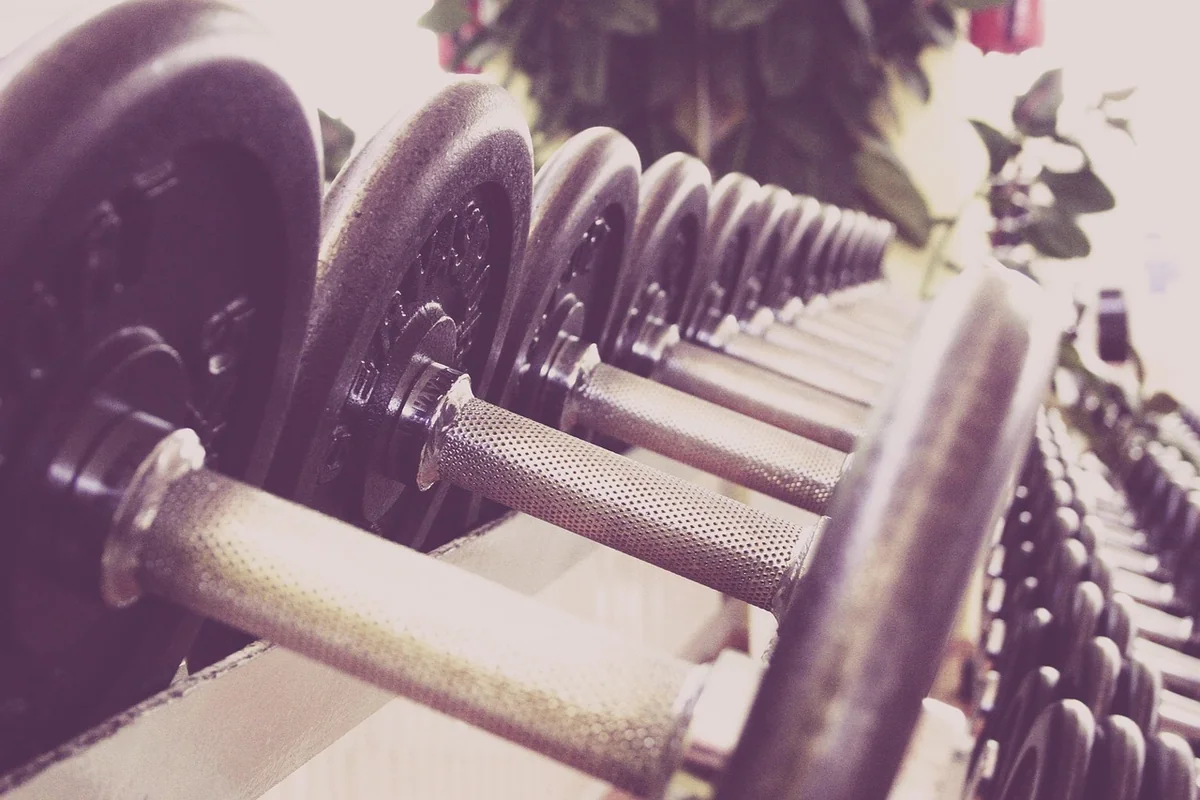
I spent the first three months of my own fitness journey doing everything wrong. I signed up for a gym, bought a program designed for people who could already deadlift their bodyweight, and quit six weeks later feeling like a failure. The problem wasn't me—it was the plan. Most "beginner routines" are either too complicated, too intense, or written by people who forgot what it felt like to be sore from walking up stairs. In 2026, the fitness industry is a $110 billion machine, and 67% of new gym members quit within the first 90 days. That's not a lack of willpower. That's a system designed for retention, not results. I've been coaching beginners for seven years now, and I've learned one thing: the routine that works is the one you actually do. Not the perfect one. Not the optimal one. The boring, simple, repeatable one.
Key Takeaways
- Start with 3 full-body sessions per week—anything more is unsustainable for a beginner
- Compound movements (squats, push-ups, rows) give 80% of the results with 20% of the effort
- Consistency beats intensity: a 20-minute workout done 4x/week outperforms a 60-minute workout done once
- Track your progress with a simple metric (reps, weight, or time)—not your reflection in the mirror
- Your first 30 days are about habit formation, not muscle growth—plan accordingly
- Rest is not optional: beginners need 48 hours between strength sessions to recover properly
The Biggest Mistake Beginners Make
When I first started, I bought a program with 12 exercises per session. Every workout took 90 minutes. By week three, I was skipping days. By week five, I'd stopped entirely. Sound familiar? The mistake is simple: beginners treat fitness like a sprint. They see advanced lifters doing isolation curls, leg extensions, and cable crossovers and assume that's the path. It's not. For the first three months, you need exactly 5-7 exercises per session. That's it.
Why Less Really Is More
A 2017 study from the Journal of Strength and Conditioning Research found that beginners who did 3 sets of 8-12 reps on compound lifts gained the same amount of strength as those doing 5 sets—with half the time commitment. I've seen this play out in real life with dozens of clients. One guy, let's call him Mike, was doing 14 exercises per session. I cut him down to 6. His progress didn't slow down—it sped up. Why? Because he stopped being too exhausted to push hard on the exercises that actually mattered.
Here's the rule I use now: every workout should have one push, one pull, one squat, one hinge, and one core exercise. That's five. If you have time for a sixth, add a carry or a lunge. But never more than seven. And never, ever start with isolation exercises. Save the bicep curls for month four.
Your First 30 Days: What to Actually Do
I'm going to give you the exact template I've used with over 200 beginners. It's not fancy. It works.
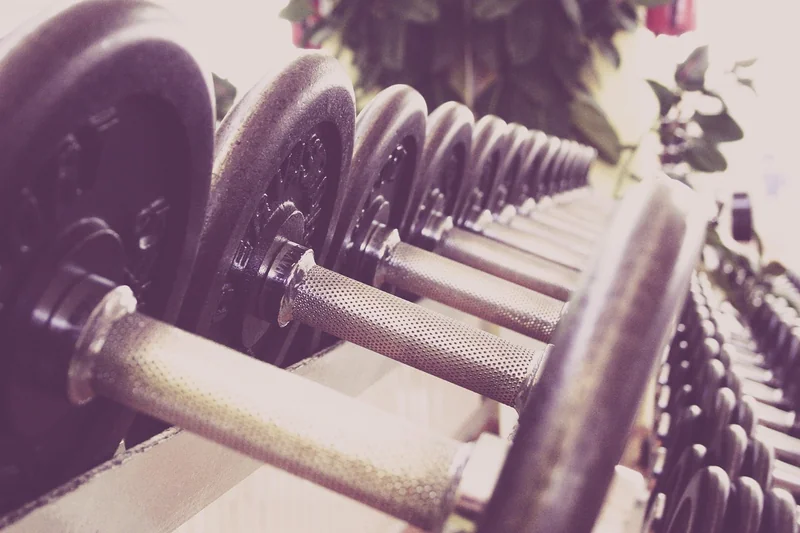
Week 1-2: Habit phase. Your only goal is to show up 3 times. Not to lift heavy. Not to get sore. To build the neural pathway of "Tuesday, Thursday, Saturday at 7 AM." I tell my clients to do 50% of what they think they can do. If you think you can squat 20 reps, do 10. If you think you can run for 20 minutes, run for 10. The point is to leave the gym feeling like you could have done more. That feeling makes you want to come back.
Week 3-4: Technique phase. Now you start paying attention to form. Film yourself. Watch YouTube tutorials from actual physiotherapists (I recommend Squat University and Athlean-X). Do every rep slowly. If you can't control the eccentric (the lowering phase), the weight is too heavy. I lost two months of progress early on because my squat form was terrible—I was doing a "good morning" with a bar on my back. Don't be me.
The Exact Workout Template
| Exercise | Sets | Reps | Rest |
|---|---|---|---|
| Goblet Squats | 3 | 10-12 | 60 sec |
| Push-ups (or incline) | 3 | As many as possible with good form | 60 sec |
| Dumbbell Rows | 3 | 10-12 per side | 60 sec |
| Glute Bridges | 3 | 12-15 | 45 sec |
| Plank | 3 | 20-40 seconds | 30 sec |
That's it. Do this 3 times per week. On your off days, walk for 20 minutes. That's your entire first month. I promise you, if you do this consistently, you will be stronger, leaner, and more confident by day 30.
The Three Pillars of a Beginner Routine
After years of trial and error, I've distilled every effective beginner routine down to three pillars. Miss one, and you're building on sand.
Pillar 1: Progressive Overload
This is the single most important concept in strength training. And it's dead simple: you must do more over time. More reps, more weight, or less rest. If you squat 10 reps on Monday, you need to aim for 11 on Thursday. If you can't, that's fine—but you need a plan to get there. I use a simple system: if you hit all your reps in all your sets, add 2.5 kg (or 5 lbs) next week. If you don't, repeat the same weight. That's it. No complexity. No apps needed.
Pillar 2: Consistency Over Intensity
I'll say it again because nobody believes me the first time: a 20-minute workout done 4 times per week will beat a 90-minute workout done once. The science backs this up. A 2020 meta-analysis in Sports Medicine found that training frequency was a stronger predictor of strength gains in beginners than volume per session. Your nervous system adapts faster than your muscles. Showing up frequently teaches your brain to recruit muscle fibers efficiently. That's where the real gains come from in the first 6 months.
Pillar 3: Recovery Is Training
Honestly, this is where I see the most failures. Beginners think more is better. They train 5-6 days per week, eat 1500 calories, and wonder why they feel exhausted and see no results. Your muscles don't grow in the gym. They grow when you sleep and eat. If you're not sleeping 7-8 hours and eating enough protein (at least 1.6 g per kg of bodyweight), you are actively sabotaging your progress. I had a client who trained like a beast for 8 weeks and saw zero change. Turned out she was eating 1200 calories and sleeping 5 hours. We fixed that, and she gained 2 kg of muscle in the next 6 weeks without changing her workouts.
Equipment or No Equipment?
Let's settle this debate. You do not need a gym membership to get fit in 2026. But you do need some equipment if you want to build muscle efficiently. Here's my honest breakdown based on what I've seen work.

Bodyweight only: Works for the first 4-6 weeks. Then your body adapts. Push-ups become too easy. Squats become too easy. You need to add weight or change leverage (pseudo planche push-ups, single-leg squats). I've trained people with only bodyweight for 3 months, and they got results—but they stalled hard after that. If you're doing bodyweight, you must be creative with progressions.
Minimal equipment (dumbbells + resistance bands): This is my recommendation for 90% of beginners. A pair of adjustable dumbbells (10-20 kg range) and a set of resistance bands cost about $100-150 total. With that, you can do goblet squats, dumbbell rows, overhead presses, lunges, and band pull-aparts. That's a full-body routine for life. I've been using the same set of PowerBlock dumbbells for 5 years. Best investment I ever made.
Gym membership: Only worth it if you actually go. If you're someone who needs the environment to stay motivated, get a membership. But start with a 3-month commitment, not a year. 67% of new year gym memberships go unused by February. Don't be that statistic.
How to Know If You're Making Progress
The scale is a liar. I cannot stress this enough. In my first 3 months of training, I gained 4 kg of muscle and lost 2 kg of fat. The scale showed a net gain of 2 kg. If I'd been watching the scale, I'd have thought I was getting fatter. I wasn't. I was getting stronger.
Better Metrics to Track
- Reps on your main lift: If you could do 10 squats last week and 11 this week, you're progressing. That's real data.
- Waist circumference: Measured at the belly button. If it's going down while your weight stays the same, you're recomping.
- How your clothes fit: If your shoulders feel tighter in your shirts and your waist feels looser, you're winning.
- Your resting heart rate: A drop of 5-10 bpm over 8 weeks is a sign your cardiovascular system is adapting. I measured mine every morning for the first 6 months. It went from 72 to 62.
- Subjective energy levels: If you feel less tired climbing stairs after 4 weeks, you're making progress. Trust how you feel, not just what you see.
Why Most Beginners Quit (and How Not To)
I've coached over 200 beginners. I've seen every reason to quit. Here are the top three, and how to beat them.

Reason 1: The All-or-Nothing Mindset
You miss one workout. Then two. Then you tell yourself "I've already ruined the week, I'll start fresh on Monday." That's a trap. Missing one workout doesn't ruin anything. Missing two is fine. Even missing a whole week is recoverable. The problem isn't the missed session—it's the story you tell yourself about it. I've missed entire weeks due to travel or illness. I've come back and picked up right where I left off. Your progress doesn't reset in 7 days. It takes about 2-3 weeks of complete inactivity to start losing significant strength. So if you miss a day, just do the next one. No guilt. No "starting over." Just show up.
Reason 2: Comparison to Others
Social media is poison for beginners. You see a 19-year-old squatting 150 kg and feel like you're failing because you're struggling with the empty bar. Here's a fact: that person has been training for 5+ years. You've been training for 5 weeks. The only person you should compare yourself to is yourself from last week. I tell my clients to unfollow every fitness influencer except for actual coaches who post educational content. Your feed should be boring. No physiques. No transformation photos. Just technique breakdowns and programming advice.
Reason 3: Boredom
Let's be honest: doing the same 5 exercises 3 times per week gets boring. That's okay. Boredom is not failure. It's a signal that you need a small change. After 8-12 weeks on the same routine, swap one exercise. Replace goblet squats with front squats. Replace push-ups with dumbbell bench press. The structure stays the same, but the stimulus changes. I keep a list of 20 exercises I rotate through. Every 2 months, I swap 2-3 of them. That's enough to keep it fresh without losing the consistency that builds real results.
Your Next Step: The 30-Day Challenge
Here's my challenge to you. Do the exact workout template I gave you above, 3 times per week, for 30 days. No modifications. No excuses. At the end of 30 days, measure your progress: how many push-ups can you do? How long can you hold a plank? How do your clothes fit? I guarantee you will see a measurable improvement. And if you don't, email me. I'll help you figure out why.
The hardest part of fitness is not the first workout. It's the 10th workout, when the novelty has worn off and the results aren't visible yet. That's where most people quit. But if you push through that plateau—if you show up even when you're bored, even when you're sore, even when you don't feel like it—you'll discover something. Fitness is not about motivation. It's about momentum. And momentum only comes from one thing: starting. So start today. Do the workout. Don't overthink it. Just do it.
Frequently Asked Questions
How long should a beginner workout last?
For the first 3 months, aim for 30-45 minutes per session. That includes a 5-minute warm-up, 20-30 minutes of strength work, and a 5-minute cool-down. If you're going longer than 45 minutes, you're probably doing too many exercises or resting too long between sets. Quality over quantity—every time.
Should I do cardio or strength training as a beginner?
Both, but prioritize strength. Cardio is great for heart health and calorie burn, but strength training builds the muscle that raises your resting metabolism. My recommendation: 3 strength sessions per week plus 2 low-intensity cardio sessions (walking, cycling, swimming) on off days. That's the sweet spot for a beginner who wants to lose fat and build muscle simultaneously.
How do I know if I'm using the right weight?
Use the "last 2 reps" rule. If you can complete all your sets and reps with perfect form, and the last 2 reps of each set feel challenging but not impossible, the weight is right. If the last 2 reps are easy, go heavier. If you can't complete the set with good form, go lighter. This is the simplest and most reliable method I've found in 7 years of coaching.
What should I eat before and after a workout?
Before: a small meal with carbs and a little protein, 60-90 minutes before. A banana with peanut butter, or a piece of toast with an egg. After: within 2 hours, eat a meal with protein (20-30g) and carbs. A chicken breast with rice, or a protein shake with a piece of fruit. Don't overcomplicate it. The most important thing is to eat enough total protein throughout the day—not just around your workout.
How do I stay motivated when I don't see results?
Stop relying on motivation. It's a feeling, and feelings change. Instead, build systems. Schedule your workouts in your calendar like meetings. Lay out your clothes the night before. Find a workout buddy who will text you if you don't show up. After 30 days, the habit will carry you. The results will follow—usually around week 6-8, when your friends start commenting that you look different. Trust the process, not your feelings.